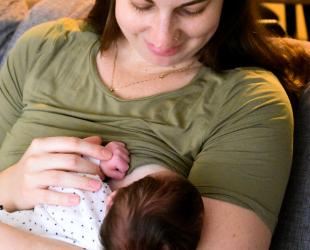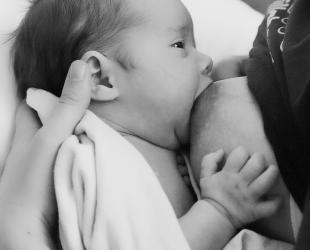
Discover comfortable ways to hold and support your baby while breastfeeding.
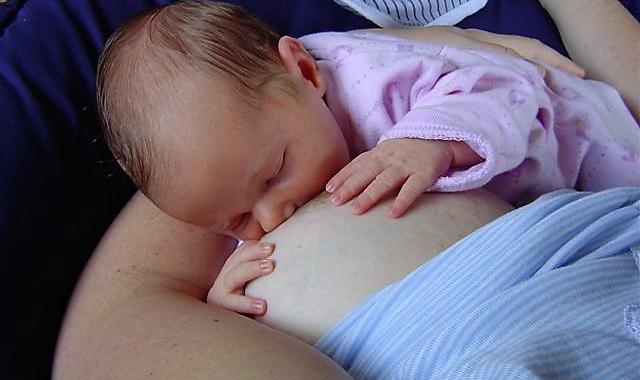
Breastfeeding looks different for every mum. Many of the tips in this article can help anyone, but they’re especially useful if you have larger breasts.
Sometimes it’s harder to find pictures or videos that show how different positions work with larger breasts, so we’ve gathered practical ideas to make feeding more comfortable for you and your baby.
Read this article alongside the general information on positioning and attachment.
Comfortable ways to hold your baby
There are various ways to hold your baby while breastfeeding. You might find one position works better for you both, or you may like to try a few different holds to see what feels most comfortable.
- Mums with larger breasts often find that the cradle hold, football hold or lying back positions are most helpful for feeding. These positions make it easier for your baby’s nose to be clear
- Supporting your breast with a pillow or placing a rolled-up cloth nappy or thin towel under your breast may help you to see your baby’s attachment at the breast more easily. Lifting your breast like this can also help to create space around your baby's nose, so they can breathe and swallow comfortably as they feed.
- You may not need to use a pillow at all. If you let your breast position naturally you can simply bring your baby to your breast and let baby rest on your lap.
However you hold your baby, it’s important that you are comfortable, that your back is well-supported and that you aren’t bending forward or leaning over.
In the following video, Dr Theresa Nesbitt and Nancy Morhbacher IBCLC discuss feeding positions that may work for mums with larger breasts.
Helping your baby to attach
If your baby is attached well to the breast, their chin will touch your breast and their nose will be clear. You shouldn’t need to press your finger into your breast for your baby to breathe.
If you’re supporting your breast as your baby attaches, try to keep your baby and your breast at the same level. If you let your breast go, its weight may pull some of it out of your baby's mouth which can be uncomfortable and may cause nipple damage.
You could try shaping your breast with your hand to help your baby get a good mouthful of breast tissue. Be careful to shape your breast in a way that makes it easier, not harder, for your baby to attach. Hold your breast in the same way as you’d hold a sandwich, so your baby can take a good mouthful.
If you are shaping your breast, do it gently. Try not to press or squeeze your breast. And keep your fingers away from your areola and your baby's mouth.
If you can't see your nipples, try breastfeeding in front of a mirror.
Tips for keeping comfortable
Breasts may feel heavy during feeding but comfort matters for both you and your baby. Here are some tips mums have found helpful:
A properly fitted maternity bra can help with support and prevent discomfort.
You may find a chair without arms gives you more space to get comfortable. Make sure it has good back support or use a footstool to reduce strain.
Feeding away from home
Many women feel self-conscious about breastfeeding in places other than their home or a baby-care room. Research shows this can be even harder for some women, including those with larger breasts, due to social attitudes and lack of privacy. Finding a comfortable way to hold your baby and support your breast can take extra effort. Worries about how you look or drawing attention can add to the stress.
Some things that might help:
- Wear clothes that make it easy for your baby to access your breast. You may feel less self-conscious with a top that lifts up rather than one that pulls down. Some mums wear two layers – a singlet that pulls down and keeps their side and front covered, and a t-shirt that lifts up.
- Position your pram create a bit more privacy and so you can rest your feet.
- Use a scarf or light wrap to cover your shoulders and upper chest if you’d like more privacy.
- If you prefer a private space, check your local shopping areas for locations of baby feed and change rooms.
© Australian Breastfeeding Association December 2025